With the growing number of cancer patients and sleep apnea cases in the United States and Europe, many are wondering if there is a link between snoring and cancer. Will snoring actually put you at risk of developing cancer? Or is snoring a symptom of one of the many types of cancers?
Studies about Cancer and Snoring
The University of Washington was involved in a study that was linking snoring and breast cancer. Assistant professor, Amanda Phipps, who teaches epidemiology at UW, worked with her students to make headway on linking the snoring epidemic as an early sign of cancer. The study specifically related to breast cancer, since it’s difficult to compare snoring to the thousands of types of cancers out there – they figured they would just focus on one. UW partnered with the Women’s Health Initiative so she could analyze patient data from over 15,000 women that were diagnosed with breast cancer at one point or another.

The results were shocking. Phipps and her research team found that a woman with breast cancer who snored was twice as likely to die faster than one who did not snore.
The two types of test groups in the study consisted of the following:
- women with breast cancer who received under 6 hours of a restless sleep that snored
- women with breast cancer who did not snore, and got 7-8 hours of sleep each night
Women’s Health Initiative -What is it?
The WHI is a long-term, national medical group that studies women over the age of 50. The group of women has consented to provide researchers with data and information including their diet, lifestyle, hormone therapy involvement and any other medical information researchers need in order to better understand diseases. There are over 100,000 women in the organization, all in post-menopausal stages of life. Their data helps medical professionals treat diseases, plan medical costs, and distribute data to doctors and researchers involved in clinical trials.
Another study that was done on lab rats, showed evidence that low oxygen received in the brain started the growth of tumors. Snoring is a symptom of sleep apnea, a dangerous sleep disorder, that limits the amount of oxygen to all parts of your body, but most importantly the brain.
Sleep Apnea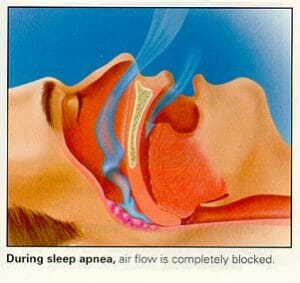
The University of Florida Health Science Center published an article in 2012 saying that people that suffer from sleep disorders such as sleep apnea or obstructive sleep apnea are 5 times more likely to die of cancer than those who experience normal breathing patterns during sleep. The worse the sleep apnea condition is, the more likely they are to develop and die of cancer.
Your body needs oxygen to survive. If you are not getting a constant flow of oxygen into your body while you sleep, the carbon dioxide levels in your blood rise while the oxygen levels decrease. After a few minutes of this occurring, a person can actually die. With sleep apnea, your brain wakes up your body when the carbon dioxide levels get too high. This is when you awake and gasp for a breath of air, and sometimes you can’t even feel it because you are still asleep. Your bed partner will most likely hear this gasp for air and will nudge you or wake you to tell you that you are snoring loudly. When this occurs hundreds of time during the night, it’s referred to as obstructive sleep apnea. It’s very harmful to the body because it’s not providing oxygen to the brain. Several harmful side effects of the lack of oxygen are listed below.
Harmful Side Effects of Untreated Sleep Apnea
Systemic Inflammation and Lack of Oxygen from Sleep Apnea
SI, or systemic inflammation, occurs when inflammatory cytokines are released from your bodies immune system. Cytokines in simple terms are growth cells. Your immune system is made up of healthy cells that fight off infection and keep your body healthy. When oxygen is deprived of your body, possibly due to untreated sleep apnea, cytokines that are pro-inflammatory, are released from the immune system and can potentially carry inflammation from one part of your body to the next. When your body is inflamed, it can make you intolerant to certain chemicals, medicines, and foods. It can lead to a poorly functioning immune system and other diseases including cancer.
Chronic Inflammation
If Systemic inflammation occurs and remains untreated, it could potentially form into chronic inflammation, which is also related to the lack of airflow throughout the body. This means the inflammation has not been treated or has not gone away. Inflammation is the body’s natural treatment of keeping you healthy and is a response directly from your immune system. If there is an infection or the body needs to rid itself of something, the area becomes inflamed. The inflammation caused is actually the body’s way of protecting you. If Chronic inflammation persists for months or years, the body starts to work overtime on healing the affected area. When this occurs, it can lead to serious conditions like rheumatoid arthritis, hay fever, heart disease, and cancers.
Oxidation
Another risk factor for sleep apnea and having interrupted sleeping patterns is forming oxidation. Oxidation is another side effect of chronic inflammation. When oxidation occurs, it is referred to as oxidative stress. This stress wears down the immune system due to lack of oxygen and may allow pathogens and harmful cancer cells to grow and spread through the body.
Is Sleep Apnea and Snoring a Side Effect of Cancer?
To reverse the tables for a moment, some cancer patients wonder if snoring is an onset side effect of cancer. Some say that the snoring wouldn’t be a side effect of cancer, but rather the cancer treatments. Chemotherapy and radiation are the two most common forms of cancer treatments. Symptoms in patients vary, but some people undergoing chemotherapy and radiation have complained that snoring is a side effect of their treatment and that they never experienced
 snoring until they had cancer.
It’s difficult for researchers to determine whether or not cancer treatments cause snoring or not because there are so many side effects from the treatments in general. It’s possible that a side effect could trigger snoring, thus it is unrelated to actual cancer.
In conclusion, it’s quite possible that snoring and sleep apnea may be related to cancer and could cause cancer in some instances. More research will provide hard data to answer this question. In the meantime, it’s important to address your snoring issues. Since snoring is one of the most noticeable symptoms of sleep apnea, you should schedule an appointment with your doctor to determine whether or not you have sleep apnea. You will most likely be referred to another doctor who will administer an overnight sleep study. The sleep study will monitor your brain activity, heart rate, and other data to determine whether or not sleep apnea is present. From there, your healthcare professional will present your options for treatment, if sleep apnea is diagnosed after all. It’s a precautionary measure to go to the doctor now, especially if researchers are already linking sleep apnea and cancer.
Share This Post:










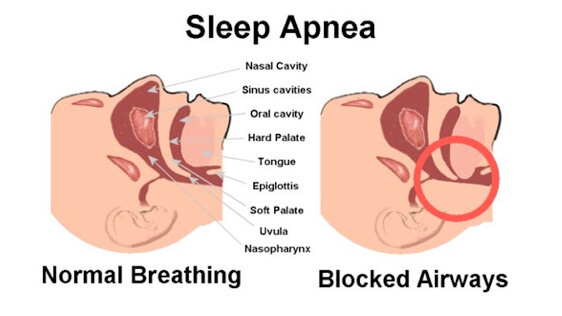 OSA is commonly recognized by a bed partner because they will hear the sound of snoring, and then there will be silence for several seconds. It can be frightening for the bed partner, but also the snorer because you actually stop breathing for a short period of time and then awake suddenly while choking or trying to catch your breath. Sometimes you can wake yourself up from these episodes and other times you won’t even know that you’re doing it. This is why the bed partner is usually the one to mention it to the snorer because it is disruptive but also very concerning. This is the most prevalent and noticeable symptom of OSA. The fact that you stop and start breathing repeatedly throughout the night is very dangerous because there is a limited amount of airflow going into the body. The body survives off of oxygen and by limiting it, serious problems can occur.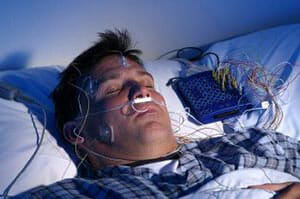



 How is
  While this is a question that should be answered by your doctor, there are certain indicators that you may be carrying too much weight.

 While most women are unwilling to admit to others that they snore, there’s no denying the fact that snoring occurs in both men and women. It’s also true that while women do snore, it’s much more likely for men to snore than women. While the statistics vary, approximately two out of five men snore while only one out of four women snore. What is the reason for this disparity and what can men do to help level the playing field? Experts feel that there are a few reasons why men snore more than women.
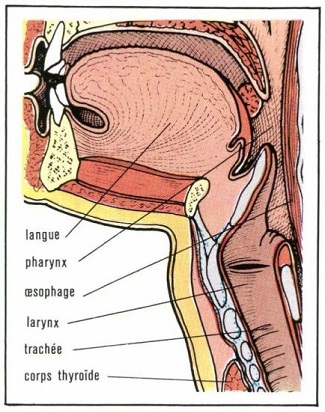 Anatomy differences are another reason why men tend to snore more than women. We already know the obvious differences in anatomy between men and women but what about the airway? Is there a difference between the airway of men and women and could this be yet another reason why men are more prone to snoring? Once again, the answer is YES.
 Did you know that at least half of snorers are positional snorers, meaning that snoring occurs while laying on the back but does not occur while sleeping on their side? The reason for this is quite simple and has to do with the gravitational force of fat and muscle in the airway that’s responsible for reducing airflow while laying on your back. By laying on your side, you effectively shift the weight of the fat and muscle in the neck away from the airway which helps to prevent snoring. Use a wedge pillow or other device to help prop up your back and prevent rollover. There are actually belts that are made specifically for promoting side sleeping.
 If all efforts to reduce your snoring fail, you can always resort to a snoring mouthpiece, also known as a mandibular advancement device. There are several different models to choose from, although they all work in the same fashion by holding the jaw or tongue forward which prevents the airway from becoming restricted. Snoring mouthpieces are highly effective at reducing or eliminating the sound of snoring.

 Water, H2O, Aqua, call it what you like but it’s essential in order to maintain life. While we all know this, it’s surprising to hear that up to
  You may be surprised to hear that the amount of water that you consume may correlate with your snoring problem. When dehydrated, mucous membranes in the throat, nose and soft palate become sticky. The sound of snoring occurs when tissues surrounding the airway flaps around and collides with each other. This thick sticky mucus coats the airway and can cause the tissues to stick to each other, which will amplify the sound effects that are made by snoring. By consuming plenty of water, this mucus thins out and will no longer be sticky.
 The average American only drink 20 ounces of water per day. How much water should we be drinking? Depending on who you ask, you will get a different answer.
 While not the most fashionable accessory, you may want to consider carrying around a water jug in the car, at work and while at home. When I say a jug, I mean a GALLON jug.
 Those who are accustom drinking flavored sugary drinks may find it very difficult to switch to water because it is often seen as tasting bad. Nothing could be further from the truth if you drink filtered water from a good source which should have no taste at all.











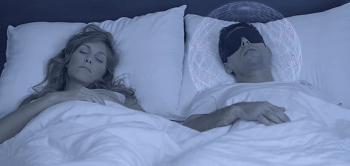 While on the surface the Silent Partner may appear to be a simple blindfold, but it’s what is inside that makes this product unique. This mask contains 2 microphone sensors, 2 speakers and a microcontroller, all powered by two 1.4v coin cell batteries. It also features a micro-USB charging port which means users will not have to change out any batteries.
 In order to raise money, many start-ups turn to Crowdfunding. With Crowdfunding, a company typically pitches their idea to an audience via crowdfunding websites such as Indiegogo, ArtistShare, Kickstarter, or Microventures to name a few. Multiple “Backers” ie. Investors contribute a small amount of money to the company to cover expenses related to the development and launch of a product.
 According to the QuietLife website, the SilentPartner is currently on Pre-Order for $77.00. They are advertising retail price at $99.00. In addition to the mask, they also sell a charging stand and travel bag. All three can be purchased as a complete packaged for the pre-order price of $82.00 (regularly $205.00). All items are shipped worldwide for free, which is an excellent selling point.